 Vacation Tours of Ireland
The Best Time to Visit Ireland, Month by Month
The best time to visit Ireland depends on what you want from the trip, but the weather numbers make one window stand out. This guide walks through all twelve months using Met Eireann's 1991 to 2020 averages, then groups them into four seasons with what is open, what it costs and what is on. It also shows which months suit a guided tour, because group sizes and cancellation terms differ by tour. If you want the shortlist of bookable trips first, the vacation tours of Ireland on the tours of Ireland set out the multi-day options side by side.
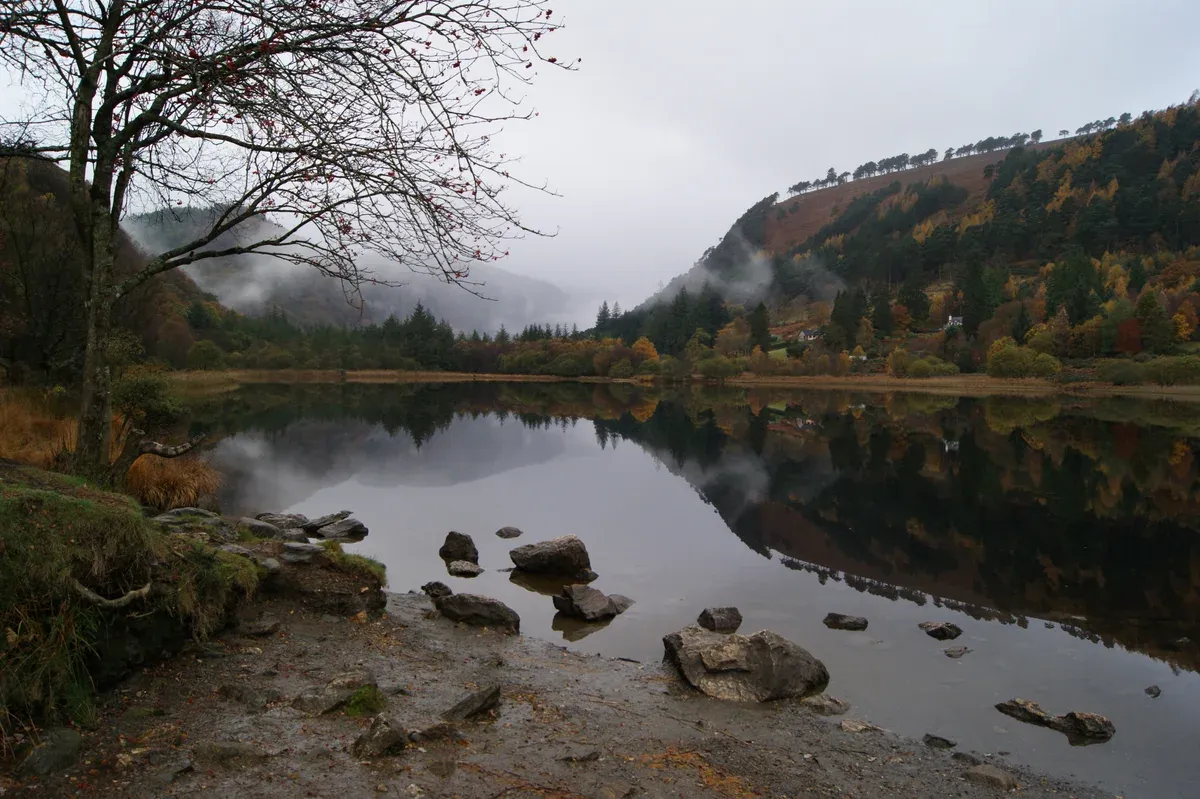
The Upper Lake at Glendalough in the Wicklow Mountains in autumn. Photo: Bananenfalter, CC0, via Wikimedia Commons
Quick answer The short answer
May, June and September are the best time to visit Ireland, with Dublin highs of 14.8 C, 17.7 C and 16.9 C and daylight stretching to about 17 hours at the June solstice. May gives the most sunshine of any month at Dublin Airport, 6.4 hours a day, and the west coast is at its driest from April to June.
Key takeaways
- Want the weather numbers for your month? The full Ireland month by month table below has Dublin highs, west coast highs and rain day counts.
- Shoulder months suit small-group travel well, and the 5-day south west Ireland tour runs the Cliffs of Moher, Kerry and Cork with breakfast and entry included.
- Building a first trip around one week? The 7 day Ireland itinerary shows how the days fit together.
- The longest days also suit the longest drives, so see the Wild Atlantic Way if a coastal route is on your list.
Ireland Month by Month
All figures are Met Eireann 1991 to 2020 averages. Dublin highs come from Dublin Airport and west coast highs from Valentia Observatory in Kerry and Belmullet in Mayo, the stations that stand in for the Atlantic seaboard.
The Numbers at a Glance
The table below compares every month on the two things that shape an Irish trip most: how warm the afternoon gets and how often rain falls. Dublin Airport supplies the east coast figures. Valentia Observatory supplies the west coast high for the months the facts list it, and Belmullet fills January and August alongside it. Rain days are days with 1 mm or more at Dublin Airport. Where a figure is not published for a station, the cell says so rather than guessing.
The verdict column is the practical read: island boats, long daylight and peak prices move the answer around the calendar.
| Month | Dublin high | West coast high | Rain days (Dublin) | For a trip |
|---|---|---|---|---|
| January | 8.0 C | 8.9-9.8 C | 12.5 | Quietest and cheapest, short days |
| February | 8.5 C | Not listed | 11.0 | Cold but drying out |
| March | 10.1 C | Not listed | 10.7 | Saint Patrick's Day on the 17th |
| April | 12.3 C | Not listed | 11.1 | Dry spell starts in the west |
| May | 14.8 C | Not listed | 10.5 | One of the three best months |
| June | 17.7 C | Not listed | 9.8 | About 17 hours of daylight |
| July | 19.5 C | Not listed | 11.6 | Warmest, busiest, dearest |
| August | 19.1 C | 17.7-18.0 C | 11.8 | Warm and festival-heavy |
| September | 16.9 C | Not listed | 10.7 | The third best month |
| October | 13.6 C | Not listed | 11.6 | Shoulder prices, wetter |
| November | 10.3 C | Not listed | 12.5 | Wettest month at Dublin Airport |
| December | 8.3 C | Not listed | 13.3 | About 7.5 hours of daylight |
What the Table Actually Tells You
Three patterns decide your month. First, the temperature range is narrow. Dublin Airport moves only from 8.0 C in January to 19.5 C in July, and the west coast is narrower still: Belmullet runs 8.9 C in January against 17.7 C in August and Valentia runs 9.8 C against 18.0 C. Ireland never gets very hot or very cold, so the season you choose is less about warmth and more about daylight and rain.
Second, the west is far wetter than the east. Valentia Observatory takes 1,646.5 mm of rain a year, about 2.1 times Dublin Airport's 772.5 mm, and it records rain on 203.1 days a year against Dublin's 137.1. No month at Valentia averages under 94 mm of rain. Pack for the west even in the best month.
Third, daylight swings harder than temperature. Dublin has about 17 hours of daylight at the June solstice, with sunrise at 4:56 am and sunset at 9:56 pm, against about 7 hours 30 minutes at the December solstice, sunrise 8:38 am and sunset 4:08 pm.
Sunshine follows the same curve. May averages 6.4 hours a day at Dublin Airport and 5.7 at Valentia, while December manages 1.7 and 1.2. That gap is why May sits in the top three months.
Sources: Met Eireann, Dublin Airport, Valentia Observatory and Belmullet, 1991 to 2020 averages.
Spring, Summer, Autumn and Winter
The twelve months group into four seasons with very different trade-offs on price, crowds and what is open.
Spring: March, April and May
Spring warms fast on paper. Dublin Airport mean daily maxima climb from 10.1 C in March to 12.3 C in April and 14.8 C in May, and May is the sunniest month of the year at 6.4 hours a day. April is the driest of the spring months at Dublin Airport, 55 mm, and the April to June spell is also the driest at Belmullet and Valentia. Air frost fades too: Dublin Airport logs 7.1 frost days in January and none from June to August.
Crowds stay low before the school holidays, since primary schools close only in the last week of June. Accommodation is easier to find than in July. Saint Patrick's Day on 17 March is the season's headline event, a public holiday in the Republic and in Northern Ireland, and the first parade in Ireland was held in Waterford in 1903. Easter Monday is the one holiday whose date moves much, falling on 6 April and 29 March.
Spring is a strong month for a guided trip, and the 4-day south west Ireland tour covers Galway, the Cliffs of Moher, Killarney and the Dingle Peninsula with three nights of breakfast from $568.20.
Summer: June, July and August
Summer is peak season and the figures show why. Dublin highs reach 17.7 C in June, 19.5 C in July and 19.1 C in August, the record high in the 1991 to 2020 table being 32.0 C at Shannon in June. Daylight runs 16 to 18 hours, and on 21 June Dublin has about 17 hours of it with sunrise at 4:56 am. Rain stays modest at Dublin Airport, 9.8 rain days in June, the lowest of any month.
Skellig Michael's season is listed by the OPW as running from 12 May into September, weather permitting, and admission to the island itself is free with access only through permitted boat operators who charge separately. Great Blasket ferries also run seasonally from Dunquin Pier, Dingle Marina and Ventry Pier, and one operator lists a 7-hour tour with 3 hours ashore at €100 a person.
The trade-off is crowds and prices, because all schools are closed for July and most of August. Festivals stack up: Bloomsday on 16 June, the Galway International Arts Festival listed for 12 to 25 July, the Galway Races Summer Festival over seven days from the last Monday of July, and Puck Fair in Killorglin on 10 to 12 August.
Autumn: September, October and November
September is the quiet third of the best three months. Dublin Airport still averages 16.9 C by day, more than 8 C above a January afternoon, and rain days sit at 10.7, well below the winter counts. October cools to 13.6 C and turns wetter at 78.4 mm, and November is the wettest month at Dublin Airport, 82.7 mm over 12.5 rain days.
Prices fall back after the school holidays end, and the October mid-term break, which runs Monday 26 to Friday 30 October, is the last family crowd of the season. The last Monday of October is also a public holiday.
Events carry the season. The Lisdoonvarna Matchmaking Festival in County Clare is listed as running through September, and is reported to draw about 40,000 singles. Samhain on 1 November, the old Gaelic festival that marked the start of the darker half of the year, is the root of modern Halloween and gives late October its atmosphere.
Rain days rise again in November, so September is the safer bet. If you are comparing seasons against prices, the Ireland trip cost guide puts the money side in order.
Winter: December, January and February
Winter is the honest budget play. Highs average about 8 C, with Dublin Airport at 8.0 C in January and 8.3 C in December, and Valentia never averages below 5.1 C at night. Snow or sleet falls on only about 12.5 days a year at Dublin Airport, roughly 3.2 days in each of January and February, so a white trip is unlikely. Daylight is the real constraint: about 7 hours 30 minutes at the December solstice, with the sun gone by 4:08 pm, and only 1.7 hours of daily sunshine in December at Dublin Airport.
Accommodation costs drop and crowds are thin, which is exactly the trade Intrepid lists for the season. Most sights stay open on shorter hours: Blarney Castle runs 9:00 to 17:00 from January to March, the Rock of Cashel opens 09:00 to 16:30 outside its March to October run and closes 24 to 26 December, and Brú na Bóinne opens 9:00 to 16:15 in the winter months.
Winter has its own reward. The Brú na Bóinne visitor centre opens early on the winter solstice mornings, 19 to 23 December, when regular tour options are suspended. Saint Stephen's Day on 26 December closes the public holiday list for the year. Check departure dates before you build a winter plan around a multi-day tour.
Sources: Met Eireann, Heritage Ireland, Citizens Information and sunrise-sunset.org.
Festivals and Dates Worth Planning Around
Dates are the other half of the best time to visit Ireland question. These are the recurring events that fill rooms and change the feel of a town.
The Big Fixtures
These festivals repeat every year and they change what a town is like to visit. The Galway dates matter most for July travel, because the arts festival and the races fall within a fortnight of each other and beds in the city go early. Sources are the festivals' own pages and Wikipedia.
If a festival week matters to you, book accommodation at the same time as your tour. Puck Fair is a similar case in Killorglin, a small town that absorbs a large crowd over three days. The 7 day Ireland itinerary guide shows how to fit a festival into a route without losing a sightseeing day.
| Event | When | Where |
|---|---|---|
| Saint Patrick's Day | 17 March, public holiday in the Republic and Northern Ireland | Dublin and nationwide |
| Bloomsday | 16 June every year | Dublin |
| Galway International Arts Festival | 12 to 25 July | Galway |
| Galway Races Summer Festival | Last Monday of July to the first Sunday of August | Galway |
| Puck Fair | 10 to 12 August every year | Killorglin, County Kerry |
| Lisdoonvarna Matchmaking Festival | September, dates vary by year | Lisdoonvarna, County Clare |
| Samhain and Halloween | 1 November | Nationwide |
Public Holidays and Why Bank Holiday Weekends Fill Rooms
Ireland has ten public holidays. Most are fixed to Mondays: the first Mondays in May, June and August, and the last Monday in October. Saint Brigid's Day on the first Monday of February was added in 2023. Saint Patrick's Day falls on 17 March, and Easter Monday is the only one whose date moves much, falling on 29 March. Good Friday is not a public holiday.
On a public holiday most businesses and schools close and public transport runs a restricted schedule. School holidays add to this: primary schools close in the last week of June and all schools shut for July and most of August, which is part of why summer is the busiest and most expensive window. The October mid-term break from Monday 26 to Friday 30 October has a similar effect.
For quieter travel, aim for the weeks between holidays. May after the bank holiday or late September work well, which is one reason the pick for most travellers is the 5-day south west tour in those shoulder weeks. Full cost comparisons sit on the homepage comparison table.
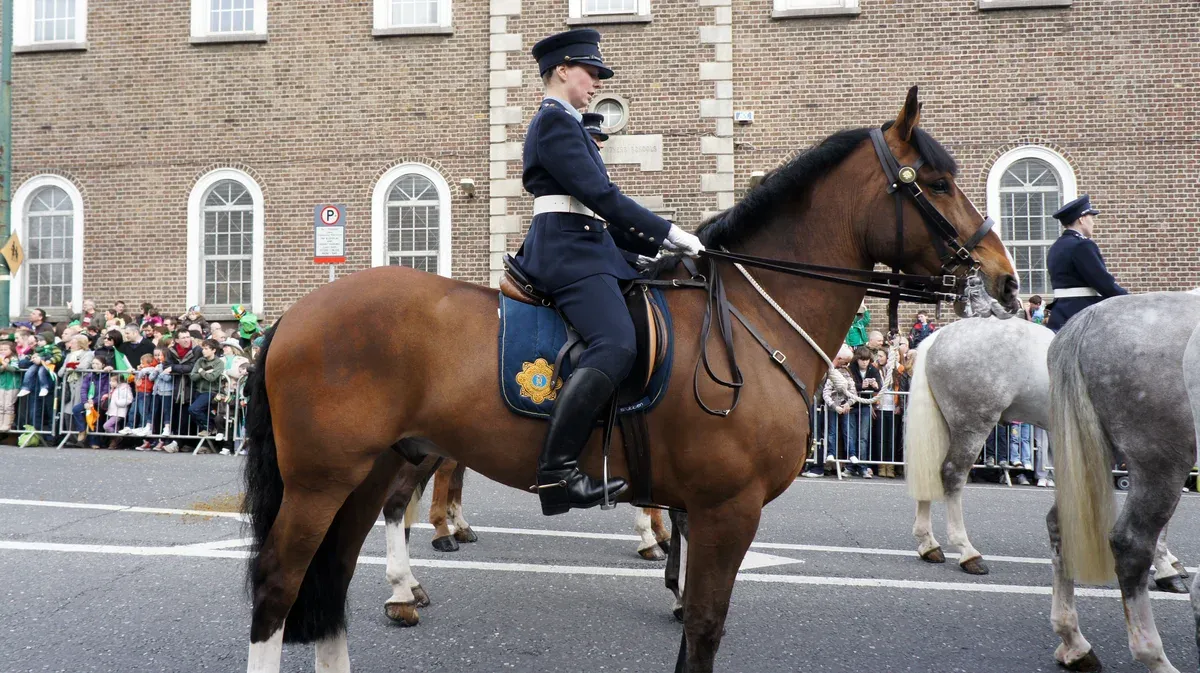
Mounted police on the route of the St Patrick's Day parade in Dublin. Photo: William Murphy, CC BY-SA 2.0, via Wikimedia Commons
What Only Opens in Summer
Several of Ireland's headline sights shut or run reduced hours outside the summer months. Your month decides what you can actually see.
Skellig Michael
The OPW lists the island opening from 12 May to September, with dates subject to change in bad weather. Admission is free but access is only through permitted boat operators who charge separately, and a visit averages 2.5 hours on the island, not counting the boat crossing. Outside the season the island is unmanned and visits are prohibited, and the OPW page carried a notice that the island was closed for the 2026 season with reopening due. Check the OPW page before booking any trip built around it.
Only the 7-day Ireland tour puts a Skellig Michael landing on its route, on day 3, and its experience fee is not included. Otherwise it is an add-on you arrange yourself. The Ring of Kerry tour from Killarney includes the Skellig Ring and St Finian's Bay instead.
The Great Blasket and Island Ferries
Great Blasket Island ferries are seasonal and leave from Dunquin Pier, Dingle Marina and Ventry Pier. Discover Ireland gives no exact start or end dates, and other sources conflict, so treat any published season as approximate. One operator, Mick Sheeran, lists a 7-hour main tour with 3 hours ashore on Great Blasket at €100 a person for up to 20 passengers. The same boat runs pelagic wildlife trips at €100 to €300.
The Aran Islands and Cliffs of Moher tour from Galway runs a return ferry to Inis Oírr with a Cliffs of Moher cruise, at $89 for 10.5 hours.
Seasonal Hours at Other Sites
Longer daylight and longer opening go together. The Cliffs of Moher site is open daily from 8am to 7pm on its official page, with adult tickets from €8. Brú na Bóinne visitor centre runs 9:00 to 17:45 from May to September against 9:00 to 16:15 in the winter months, and opens earlier on winter solstice mornings from 19 to 23 December. Blarney Castle opens to 18:00 from May to September against 9:00 to 17:00 from January to March.
The Rock of Cashel shows the same pattern in reverse, opening 09:00 to 17:30 from 17 March to 15 October and 09:00 to 16:30 the rest of the year, closed 24 to 26 December. Note that Cormac's Chapel there can only be visited on a guided tour and the exposed site can close at short notice in bad weather, one more argument for shoulder-season flexibility. Pairing several of these stops in one trip is what the 10-day Ireland tour is built for.
Booking a Tour for Your Month
Which tours run when, and what changes between a July booking and a January one.
What Changes With the Season
The 10-day small-group trip caps at 15 passengers and the island-focused 7-day trip at 12, so check departure dates early for your month. The large coach tours take up to 56 passengers.
In winter, the cancellation window matters more than the group size. Atlantic storms bring gales, with Valentia recording 2.2 gale days in January alone, so a tight cancellation policy is a real risk if a crossing or a mountain road closes. Free cancellation terms vary from 24 hours to 21 days on the cards, and some departures carry no refund at all. Read that line before any November to February booking, and see the Ireland tours for seniors guide if pace and accessibility are the priority.
Three Tours, Three Seasons
For May or September, the shoulder sweet spot, the 5-day South West Ireland tour from Rabbie's runs at $1,464.67, in a small group, with the Cliffs of Moher entry included and free cancellation 21 days out.
For a summer trip you want booked early, the 6-day All Ireland tour covers the whole island from Belfast to Killarney at $1,023.66 in the hostel dorm option. It has no refund on cancellation, which is an acceptable risk in settled weather and a poor one in a November storm.
For a winter or deep shoulder-season short break, the 4-day South West Ireland tour starts at $568.20 in a dorm bed, with breakfast included and a 7:45 AM check-in from Dublin. It also has no refund, so in winter consider it only with travel insurance or a flexible flight. How these compare across every departure sits in the homepage comparison table, and what a price should cover is on the Ireland trip cost page.
Timing Questions
What is the cheapest month to go to Ireland?
Winter months have the lowest accommodation costs, which Intrepid lists as the trade-off for short days and around 8 C average highs. Cheap travel costs more per sight in winter because Skellig Michael is closed and several sites run reduced hours. Cost details sit in the Ireland trip cost guide.
What month is the rainiest in Ireland?
November is the wettest at Dublin Airport at 82.7 mm, while on the west coast Valentia records its highest monthly rain in November at 189.2 mm. January is nearly as wet there at 187.0 mm. The full month-by-month figures are in the best time to visit Ireland guide.
How many days are enough for Ireland?
Vagabond Tours suggests 7 days for a first visit covering one or two regions, and 11 or more days to link several regions including Northern Ireland. A 7-day trip can cover a well-developed regional itinerary such as the Cliffs of Moher, Dingle and Kerry. Route options are laid out in the 7 day Ireland itinerary.
Is March a good month to visit Ireland?
March brings Saint Patrick's Day on the 17th, a public holiday that fills Dublin, and mean daily maxima of 10.1 C at Dublin Airport. Daylight is still short. It suits city-focused trips such as the day trips from Dublin list.
When should I book a summer tour of Ireland?
Book as early as you can. Small-group departures cap at 12 to 16 passengers, so book early for June to August, when schools are out for July and most of August. Compare capacity and prices across the vacation tours of Ireland homepage before you commit.
What is the worst time to visit Ireland?
Late November through January combines the wettest months, 7.5 hours of daylight in Dublin at the winter solstice, and closures such as Skellig Michael. It works only for city breaks and low prices. Season trade-offs are summarised in the best time to visit Ireland guide.